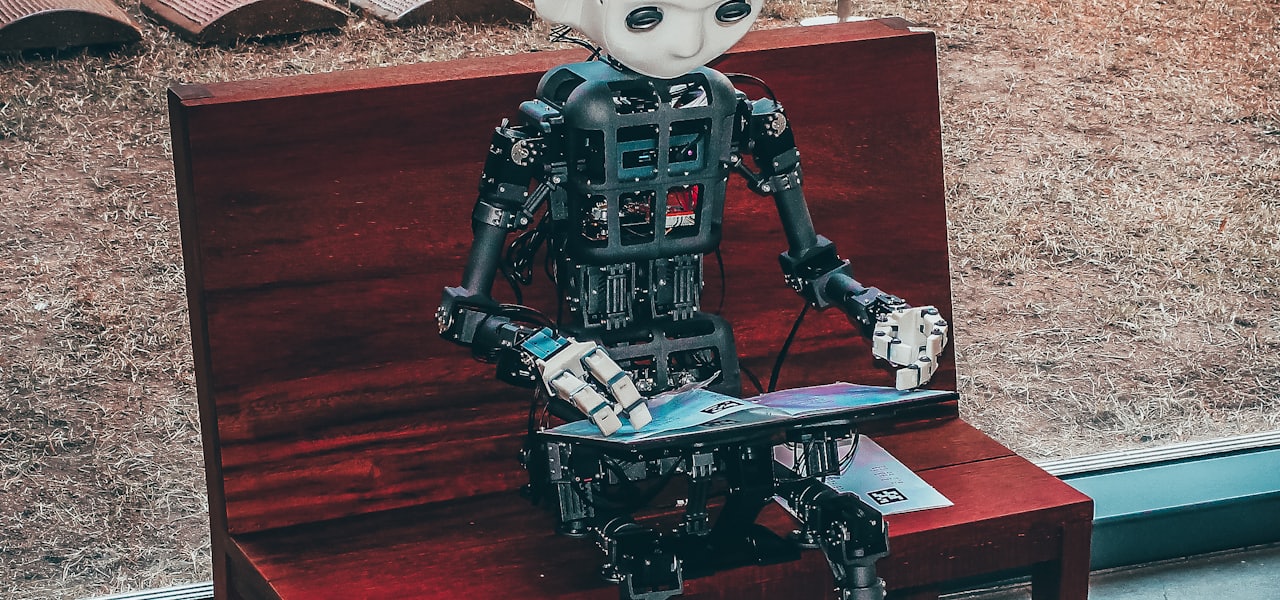
OpenCog is a project that aims to build an open source artificial intelligence framework. OpenCog Prime is an architecture for robot and virtual embodied cognition that defines a set of interacting components designed to give rise to human-equivalent artificial general intelligence (AGI) as an emergent phenomenon of the whole system. OpenCog Prime's design is primarily the work of Ben Goertzel while the OpenCog framework is intended as a generic framework for broad-based AGI research. Research utilizing OpenCog has been published in journals and presented at conferences and workshops including the annual Conference on Artificial General Intelligence. OpenCog is released under the terms of the GNU Affero General Public License. OpenCog is in use by more than 50 companies, including Huawei and Cisco. == Origin == OpenCog was originally based on the release in 2008 of the source code of the proprietary "Novamente Cognition Engine" (NCE) of Novamente LLC. The original NCE code is discussed in the PLN book (ref below). Ongoing development of OpenCog is supported by Artificial General Intelligence Research Institute (AGIRI), the Google Summer of Code project, Hanson Robotics, SingularityNET and others. == Components == OpenCog consists of: A graph database, dubbed the AtomSpace, that holds "atoms" (that is, terms, atomic formulas, sentences and relationships) together with their "values" (valuations or interpretations, which can be thought of as per-atom key-value databases). An example of a value would be a truth value. Atoms are globally unique, immutable and are indexed (searchable); values are fleeting and changeable. A collection of pre-defined atoms, termed Atomese, used for generic knowledge representation, such as conceptual graphs and semantic networks, as well as to represent and store the rules (in the sense of term rewriting) needed to manipulate such graphs. A collection of pre-defined atoms that encode a type subsystem, including type constructors and function types. These are used to specify the types of variables, terms and expressions, and are used to specify the structure of generic graphs containing variables. A collection of pre-defined atoms that encode both functional and imperative programming styles. These include the lambda abstraction for binding free variables into bound variables, as well as for performing beta reduction. A collection of pre-defined atoms that encode a satisfiability modulo theories solver, built in as a part of a generic graph query engine, for performing graph and hypergraph pattern matching (isomorphic subgraph discovery). This generalizes the idea of a structured query language (SQL) to the domain of generic graphical queries; it is an extended form of a graph query language. A generic rule engine, including a forward chainer and a backward chainer, that is able to chain together rules. The rules are exactly the graph queries of the graph query subsystem, and so the rule engine vaguely resembles a query planner. It is designed so as to allow different kinds of inference engines and reasoning systems to be implemented, such as Bayesian inference or fuzzy logic, or practical tasks, such as constraint solvers or motion planners. An attention allocation subsystem based on economic theory, termed ECAN. This subsystem is used to control the combinatorial explosion of search possibilities that are met during inference and chaining. An implementation of a probabilistic reasoning engine based on probabilistic logic networks. The current implementation uses the rule engine to chain together specific rules of logical inference (such as modus ponens), together with some very specific mathematical formulas assigning a probability and a confidence to each deduction. This subsystem can be thought of as a certain kind of proof assistant that works with a modified form of Bayesian inference. A probabilistic genetic program evolver called Meta-Optimizing Semantic Evolutionary Search, or MOSES. This is used to discover collections of short Atomese programs that accomplish tasks; these can be thought of as performing a kind of decision tree learning, resulting in a kind of decision forest, or rather, a generalization thereof. A natural language input system consisting of Link Grammar, and partly inspired by both Meaning-Text Theory as well as Dick Hudson's Word Grammar, which encodes semantic and syntactic relations in Atomese. A natural language generation system. An implementation of Psi-Theory for handling emotional states, drives and urges, dubbed OpenPsi. Interfaces to Hanson Robotics robots, including emotion modelling via OpenPsi. This includes the Loving AI project, used to demonstrate meditation techniques. == Organization and funding == In 2008, the Machine Intelligence Research Institute (MIRI), formerly called Singularity Institute for Artificial Intelligence (SIAI), sponsored several researchers and engineers. Many contributions from the open source community have been made since OpenCog's involvement in the Google Summer of Code in 2008 and 2009. Currently MIRI no longer supports OpenCog. OpenCog has received funding and support from several sources, including the Hong Kong government, Hong Kong Polytechnic University, the Jeffrey Epstein VI Foundation and Hanson Robotics. In 2013, OpenCog began providing AI solutions to Hanson Robotics, and in 2017, OpenCog became a founding member of SingularityNET. == Applications == Similar to other cognitive architectures, the main purpose is to create virtual humans, which are three dimensional avatar characters. The goal is to mimic behaviors like emotions, gestures and learning. For example, the emotion module in the software was only programmed because humans have emotions. Artificial General Intelligence can be realized if it simulates intelligence of humans. The self-description of the OpenCog project provides additional possible applications which are going into the direction of natural language processing and the simulation of a dog.
Computer Dreams
Computer Dreams is a 1988 film created by Digital Vision Entertainment and released by MPI Home Video. Written, produced and directed by Geoffrey de Valois and hosted by Amanda Pays, it consists primarily of clips and behind-the-scenes work of early computer graphics animation. Notably included are Luxo Jr. and Red's Dream, the first two short films from Pixar. The film is an hour long and features an electronic score by Music Fantastic. It was revised and re-released on DVD as The History of Computer Animation, Volume 2. It won the Winner Gold Special Jury Award at the 1989 Houston International Film Festival, and the 1989 Golden Decade Award from the US Film & Video Festival. Music used includes: Gail Lennon - Desire, Gail Lennon - Like A Dream, Shandi Sinnamon - Making It,
Ultra (cryptography)
Ultra was the designation adopted by British military intelligence in June 1941 for wartime signals intelligence obtained by breaking high-level encrypted enemy radio and teleprinter communications at the Government Code and Cypher School (GC&CS) at Bletchley Park. Ultra eventually became the standard designation among the western Allies for all such intelligence. The name arose because the intelligence obtained was considered more important than that designated by the highest British security classification then used (Most Secret) and so was regarded as being Ultra Secret. Several other cryptonyms had been used for such intelligence. The code name "Boniface" was used as a cover name for Ultra. In order to ensure that the successful code-breaking did not become apparent to the Germans, British intelligence created a fictional MI6 master spy, Boniface, who controlled a fictional series of agents throughout Germany. Information obtained through code-breaking was often attributed to the human intelligence from the Boniface network. The U.S. used the codename Magic for its decrypts from Japanese sources, including the "Purple" cipher. Much of the German cipher traffic was encrypted on the Enigma machine. Used properly, the German military Enigma would have been virtually unbreakable; in practice, shortcomings in operation allowed it to be broken. The term "Ultra" has often been used almost synonymously with "Enigma decrypts". However, Ultra also encompassed decrypts of the German Lorenz SZ 40/42 machines that were used by the German High Command, and the Hagelin machine. Many observers, at the time and later, regarded Ultra as immensely valuable to the Allies. Winston Churchill was reported to have told King George VI, when presenting to him Stewart Menzies (head of the Secret Intelligence Service and the person who controlled distribution of Ultra decrypts to the government): "It is thanks to the secret weapon of General Menzies, put into use on all the fronts, that we won the war!" F. W. Winterbotham quoted the western Supreme Allied Commander, Dwight D. Eisenhower, at war's end describing Ultra as having been "decisive" to Allied victory. Sir Harry Hinsley, Bletchley Park veteran and official historian of British Intelligence in World War II, made a similar assessment of Ultra, saying that while the Allies would have won the war without it, "the war would have been something like two years longer, perhaps three years longer, possibly four years longer than it was." However, Hinsley and others have emphasized the difficulties of counterfactual history in attempting such conclusions, and some historians, such as John Keegan, have said the shortening might have been as little as the three months it took the United States to deploy the atomic bomb. == Sources of intelligence == Most Ultra intelligence was derived from reading radio messages that had been encrypted with cipher machines, complemented by material from radio communications using traffic analysis and direction finding. In the early phases of the war, particularly during the eight-month Phoney War, the Germans could transmit most of their messages using land lines and so had no need to use radio. This meant that those at Bletchley Park had some time to build up experience of collecting and starting to decrypt messages on the various radio networks. German Enigma messages were the main source, with those of the German air force (the Luftwaffe) predominating, as they used radio more and their operators were particularly ill-disciplined. === German === ==== Enigma ==== "Enigma" refers to a family of electro-mechanical rotor cipher machines. These produced a polyalphabetic substitution cipher and were widely thought to be unbreakable in the 1920s, when a variant of the commercial Model D was first used by the Reichswehr. The German Army (Heer), Navy, Air Force, Nazi party, Gestapo and German diplomats used Enigma machines in several variants. Abwehr (German military intelligence) used a four-rotor machine without a plugboard and Naval Enigma used different key management from that of the army or air force, making its traffic far more difficult to cryptanalyse; each variant required different cryptanalytic treatment. The commercial versions were not as secure and Dilly Knox of GC&CS is said to have broken one before the war. German military Enigma was first broken in December 1932 by Marian Rejewski and the Polish Cipher Bureau, using a combination of brilliant mathematics, the services of a spy in the German office responsible for administering encrypted communications, and good luck. The Poles read Enigma to the outbreak of World War II and beyond, in France. At the turn of 1939, the Germans made the systems ten times more complex, which required a tenfold increase in Polish decryption equipment, which they could not meet. On 25 July 1939, the Polish Cipher Bureau handed reconstructed Enigma machines and their techniques for decrypting ciphers to the French and British. Gordon Welchman wrote, Ultra would never have got off the ground if we had not learned from the Poles, in the nick of time, the details both of the German military Enigma machine, and of the operating procedures that were in use. At Bletchley Park, some of the key people responsible for success against Enigma included mathematicians Alan Turing and Hugh Alexander and, at the British Tabulating Machine Company, chief engineer Harold Keen. After the war, interrogation of German cryptographic personnel led to the conclusion that German cryptanalysts understood that cryptanalytic attacks against Enigma were possible but were thought to require impracticable amounts of effort and investment. The Poles' early start at breaking Enigma and the continuity of their success gave the Allies an advantage when World War II began. ==== Lorenz cipher ==== In June 1941, the Germans started to introduce on-line stream cipher teleprinter systems for strategic point-to-point radio links, to which the British gave the code-name Fish. Several systems were used, principally the Lorenz SZ 40/42 (codenamed "Tunny" by the British) and Geheimfernschreiber ("Sturgeon"). These cipher systems were cryptanalysed, particularly Tunny, which the British thoroughly penetrated. It was eventually attacked using Colossus machines, which were the first digital programme-controlled electronic computers. In many respects the Tunny work was more difficult than for the Enigma, since the British codebreakers had no knowledge of the machine producing it and no head-start such as that the Poles had given them against Enigma. Although the volume of intelligence derived from this system was much smaller than that from Enigma, its importance was often far higher because it produced primarily high-level, strategic intelligence that was sent between Wehrmacht high command (Oberkommando der Wehrmacht, OKW). The eventual bulk decryption of Lorenz-enciphered messages contributed significantly, and perhaps decisively, to the defeat of Nazi Germany. Nevertheless, the Tunny story has become much less well known among the public than the Enigma one. At Bletchley Park, some of the key people responsible for success in the Tunny effort included mathematicians W. T. "Bill" Tutte and Max Newman and electrical engineer Tommy Flowers. === Italian === In June 1940, the Italians were using book codes for most of their military messages, except for the Italian Navy, which in early 1941 had started using a version of the Hagelin rotor-based cipher machine C-38. This was broken from June 1941 onwards by the Italian subsection of GC&CS at Bletchley Park. === Japanese === In the Pacific theatre, a Japanese cipher machine, called "Purple" by the Americans, was used for highest-level Japanese diplomatic traffic. It produced a polyalphabetic substitution cipher, but unlike Enigma, was not a rotor machine, being built around electrical stepping switches. It was broken by the US Army Signal Intelligence Service and disseminated as Magic. Detailed reports by the Japanese ambassador to Germany were encrypted on the Purple machine. His reports included reviews of German assessments of the military situation, reviews of strategy and intentions, reports on direct inspections by the ambassador (in one case, of Normandy beach defences), and reports of long interviews with Hitler. The Japanese are said to have obtained an Enigma machine in 1937, although it is debated whether they were given it by the Germans or bought a commercial version, which, apart from the plugboard and internal wiring, was the German Heer/Luftwaffe machine. Having developed a similar machine, the Japanese did not use the Enigma machine for their most secret communications. The chief fleet communications code system used by the Imperial Japanese Navy was called JN-25 by the Americans, and by early 1942 the US Navy had made considerable progress in decrypting Japanese naval messages. The US Army also made progress on the
Vans challenge
The Vans challenge is a viral internet challenge that began in March 2019 where people show their Vans shoes landing right-side up after tossing them in the air. The viral sensation reportedly started after a Twitter user shared a video of the occurrence, which was captioned: “Did you know it doesn’t matter how you throw your Vans they will land facing up.” Since then, multiple people on social media posted similar videos of them throwing their Vans in the air and landing right-side up, along with Crocs, UGG boots, and other popular shoes. This theory proved false, as these shoes have not always landed facing up after tossing them.
Social business model
The social business model is use of social media tools and social networking behavioral standards by businesses for communication with customers, suppliers, and others. Combining social networking etiquette (being helpful, transparent and authentic) with business engagement on LinkedIn (for one-to-one interaction), Twitter (for immediacy) and Facebook (for content sharing) more fully involves employees in the organization and increases customer intimacy and trust. == Overview == Traditional business models, particularly in large organizations, have had as one common characteristic careful limitation of direct contact between those within the organization and those outside of it. Only certain specific individuals (most frequently in roles such as sales, customer service and field consulting) were designated as "customer-facing" personnel. Organizations further limited outside access to internal employees through filtering mechanisms such as publishing only a main switchboard number (whether routed through a live receptionist or an interactive voice response system) and generic "sales@" or "info@" email addresses. The Cluetrain Manifesto (written by Rick Levine, Christopher Locke, Doc Searls, and David Weinberger and published in 1999) was among the first books to predict the demise of this old order and the emergence of more open business models, though most of the business world was slow to adopt the book's recommended cultural changes. Thirteen years later, authors Dion Hinchcliffe and Peter Kim added structural underpinnings to the cultural shifts outlined in The Cluetrain Manifesto in their book, Social Business by Design. The book details many of the ways social media tools and practices are being adopted within organizations, to support both internal employee collaboration and external customer engagement (which the authors describe as the "bigger problem"). == Elements == In implementing the social business model, organizations apply social networking protocols and tools in a range of areas, potentially including: Marketing Customer Support Recruiting Crowdsourcing Internal employee collaboration Sales Product Development Supply Chain Operations Investor Relations == Characteristics of organizations adopting the social business model == Organizations that fully adopt the social business model will exhibit four key characteristics: Connected – employees will be able to seamlessly engage one-on-one in real-time with other employees and individuals outside the organization (customers, prospects, partners, media, etc.) using a variety of communications methods including text chat, voice, file sharing, email, and video chat. Social – employees will follow social networking etiquette (being authentic, helpful and transparent) in external interactions. The focus will be on answering questions and providing information rather than overt sales or promotion. Presence – these conversations may originate on the company's website or elsewhere online (e.g., publication websites, industry portals, or social networking sites such as LinkedIn or Facebook). Intelligent – organizations will use in-depth analytics to monitor connections, social interactions and presence; measure corresponding business results; and continually adjust and improve practices for increased effectiveness. == Technical and functional requirements == While much of the change inherent in adopting the social business model is cultural, it also requires process changes enabled by social business technology. Functional requirements for a social business technology platform include: Analytics (including the cost of engagement as well as various measures of return on investment such as leads, sales, referrals, recommendations, and retained customers). Integration with other social media and business tools such as CRM systems, partner relationship management (PRM) software, product development, website analytics, and employee-recruiting applications. Rules-based workflow (e.g. routing a comment to the appropriate individual for a response, based on content). Geolocation (so customers or prospects can be automatically routed to local sales or customer service representatives). Content sharing. Collaboration tools. Transparency (i.e., people should know who they are engaging with) Unified communications (the ability to engage via voice, text, video, email, and share a wide variety of file types) Storage (the ability to store interactions for legal, training, compliance or compensation purposes, and purge stored data when no longer needed based on company policy or regulatory requirements). Immediacy (real-time monitoring and response).
Coupled pattern learner
Coupled Pattern Learner (CPL) is a machine learning algorithm which couples the semi-supervised learning of categories and relations to forestall the problem of semantic drift associated with boot-strap learning methods. == Coupled Pattern Learner == Semi-supervised learning approaches using a small number of labeled examples with many unlabeled examples are usually unreliable as they produce an internally consistent, but incorrect set of extractions. CPL solves this problem by simultaneously learning classifiers for many different categories and relations in the presence of an ontology defining constraints that couple the training of these classifiers. It was introduced by Andrew Carlson, Justin Betteridge, Estevam R. Hruschka Jr. and Tom M. Mitchell in 2009. == CPL overview == CPL is an approach to semi-supervised learning that yields more accurate results by coupling the training of many information extractors. Basic idea behind CPL is that semi-supervised training of a single type of extractor such as ‘coach’ is much more difficult than simultaneously training many extractors that cover a variety of inter-related entity and relation types. Using prior knowledge about the relationships between these different entities and relations CPL makes unlabeled data as a useful constraint during training. For e.g., ‘coach(x)’ implies ‘person(x)’ and ‘not sport(x)’. == CPL description == === Coupling of predicates === CPL primarily relies on the notion of coupling the learning of multiple functions so as to constrain the semi-supervised learning problem. CPL constrains the learned function in two ways. Sharing among same-arity predicates according to logical relations Relation argument type-checking === Sharing among same-arity predicates === Each predicate P in the ontology has a list of other same-arity predicates with which P is mutually exclusive. If A is mutually exclusive with predicate B, A’s positive instances and patterns become negative instances and negative patterns for B. For example, if ‘city’, having an instance ‘Boston’ and a pattern ‘mayor of arg1’, is mutually exclusive with ‘scientist’, then ‘Boston’ and ‘mayor of arg1’ will become a negative instance and a negative pattern respectively for ‘scientist.’ Further, Some categories are declared to be a subset of another category. For e.g., ‘athlete’ is a subset of ‘person’. === Relation argument type-checking === This is a type checking information used to couple the learning of relations and categories. For example, the arguments of the ‘ceoOf’ relation are declared to be of the categories ‘person’ and ‘company’. CPL does not promote a pair of noun phrases as an instance of a relation unless the two noun phrases are classified as belonging to the correct argument types. === Algorithm description === Following is a quick summary of the CPL algorithm. Input: An ontology O, and a text corpus C Output: Trusted instances/patterns for each predicate for i=1,2,...,∞ do foreach predicate p in O do EXTRACT candidate instances/contextual patterns using recently promoted patterns/instances; FILTER candidates that violate coupling; RANK candidate instances/patterns; PROMOTE top candidates; end end ==== Inputs ==== A large corpus of Part-Of-Speech tagged sentences and an initial ontology with predefined categories, relations, mutually exclusive relationships between same-arity predicates, subset relationships between some categories, seed instances for all predicates, and seed patterns for the categories. ==== Candidate extraction ==== CPL finds new candidate instances by using newly promoted patterns to extract the noun phrases that co-occur with those patterns in the text corpus. CPL extracts, Category Instances Category Patterns Relation Instances Relation Patterns ==== Candidate filtering ==== Candidate instances and patterns are filtered to maintain high precision, and to avoid extremely specific patterns. An instance is only considered for assessment if it co-occurs with at least two promoted patterns in the text corpus, and if its co-occurrence count with all promoted patterns is at least three times greater than its co-occurrence count with negative patterns. ==== Candidate ranking ==== CPL ranks candidate instances using the number of promoted patterns that they co-occur with so that candidates that occur with more patterns are ranked higher. Patterns are ranked using an estimate of the precision of each pattern. ==== Candidate promotion ==== CPL ranks the candidates according to their assessment scores and promotes at most 100 instances and 5 patterns for each predicate. Instances and patterns are only promoted if they co-occur with at least two promoted patterns or instances, respectively. == Meta-Bootstrap Learner == Meta-Bootstrap Learner (MBL) was also proposed by the authors of CPL. Meta-Bootstrap learner couples the training of multiple extraction techniques with a multi-view constraint, which requires the extractors to agree. It makes addition of coupling constraints on top of existing extraction algorithms, while treating them as black boxes, feasible. MBL assumes that the errors made by different extraction techniques are independent. Following is a quick summary of MBL. Input: An ontology O, a set of extractors ε Output: Trusted instances for each predicate for i=1,2,...,∞ do foreach predicate p in O do foreach extractor e in ε do Extract new candidates for p using e with recently promoted instances; end FILTER candidates that violate mutual-exclusion or type-checking constraints; PROMOTE candidates that were extracted by all extractors; end end Subordinate algorithms used with MBL do not promote any instance on their own, they report the evidence about each candidate to MBL and MBL is responsible for promoting instances. == Applications == In their paper authors have presented results showing the potential of CPL to contribute new facts to existing repository of semantic knowledge, Freebase
Convergent encryption
Convergent encryption, also known as content hash keying, is a cryptosystem that produces identical ciphertext from identical plaintext files. This has applications in cloud computing to remove duplicate files from storage without the provider having access to the encryption keys. The combination of deduplication and convergent encryption was described in a backup system patent filed by Stac Electronics in 1995. This combination has been used by Farsite, Permabit, Freenet, MojoNation, GNUnet, flud, and the Tahoe Least-Authority File Store. The system gained additional visibility in 2011 when cloud storage provider Bitcasa announced they were using convergent encryption to enable de-duplication of data in their cloud storage service. == Overview == The system computes a cryptographic hash of the plaintext in question. The system then encrypts the plaintext by using the hash as a key. Finally, the hash itself is stored, encrypted with a key chosen by the user. == Known Attacks == Convergent encryption is open to a "confirmation of a file attack" in which an attacker can effectively confirm whether a target possesses a certain file by encrypting an unencrypted, or plain-text, version and then simply comparing the output with files possessed by the target. This attack poses a problem for a user storing information that is non-unique, i.e. also either publicly available or already held by the adversary - for example: banned books or files that cause copyright infringement. An argument could be made that a confirmation of a file attack is rendered less effective by adding a unique piece of data such as a few random characters to the plain text before encryption; this causes the uploaded file to be unique and therefore results in a unique encrypted file. However, some implementations of convergent encryption where the plain-text is broken down into blocks based on file content, and each block then independently convergently encrypted may inadvertently defeat attempts at making the file unique by adding bytes at the beginning or end. Even more alarming than the confirmation attack is the "learn the remaining information attack" described by Drew Perttula in 2008. This type of attack applies to the encryption of files that are only slight variations of a public document. For example, if the defender encrypts a bank form including a ten digit bank account number, an attacker that is aware of generic bank form format may extract defender's bank account number by producing bank forms for all possible bank account numbers, encrypt them and then by comparing those encryptions with defender's encrypted file deduce the bank account number. Note that this attack can be extended to attack a large number of targets at once (all spelling variations of a target bank customer in the example above, or even all potential bank customers), and the presence of this problem extends to any type of form document: tax returns, financial documents, healthcare forms, employment forms, etc. Also note that there is no known method for decreasing the severity of this attack -- adding a few random bytes to files as they are stored does not help, since those bytes can likewise be attacked with the "learn the remaining information" approach. The only effective approach to mitigating this attack is to encrypt the contents of files with a non-convergent secret before storing (negating any benefit from convergent encryption), or to simply not use convergent encryption in the first place.